
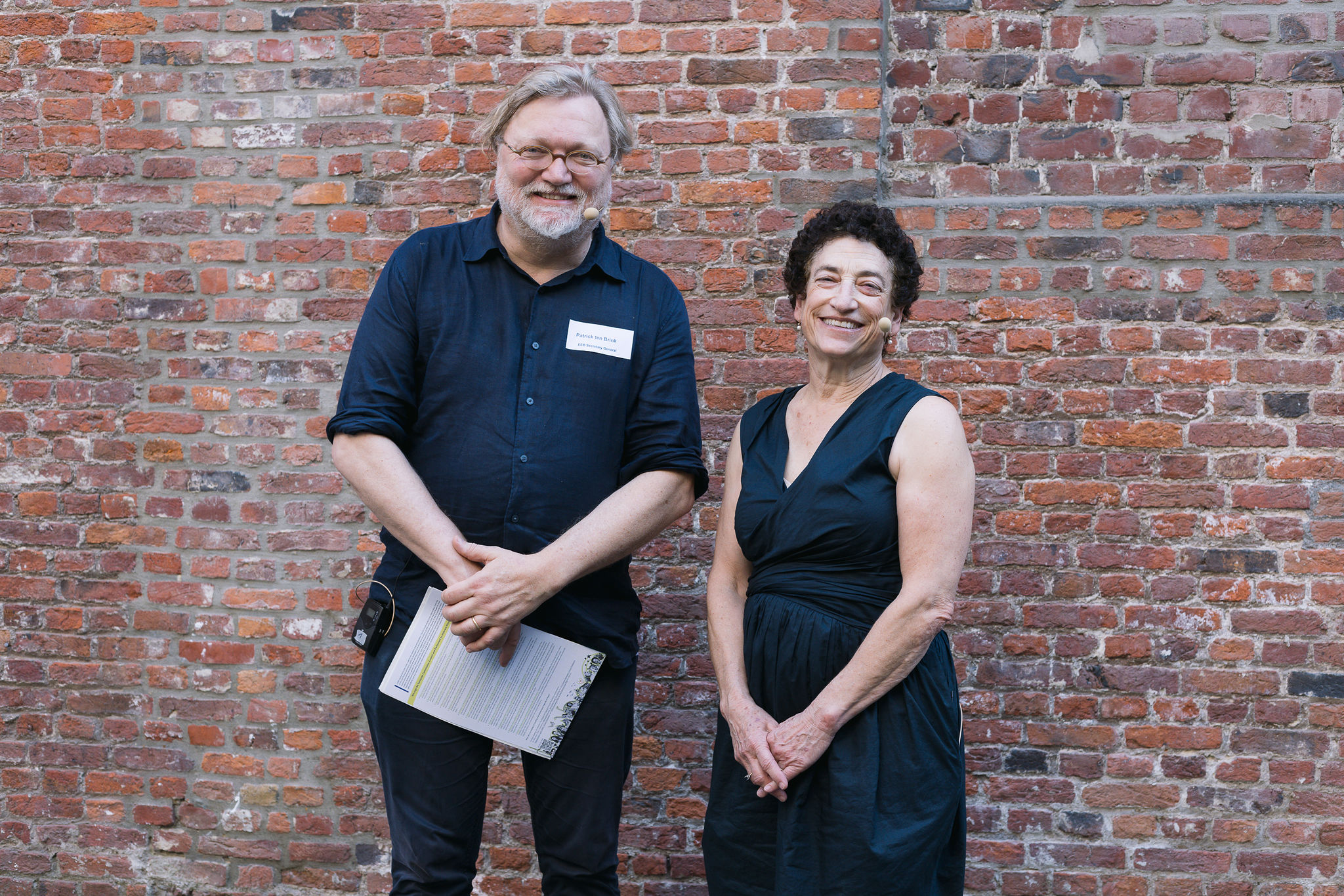
Reflections from Naomi Oreskes and Patrick ten Brink
Markets are often presented as efficient systems that, when left alone, will eventually correct themselves. Yet history tells a more complicated story.
During our conference held on 23 June 2026 with Naomi Oreskes, historian of science at Harvard University and author of The Big Myth and Merchants of Doubt amongst other books, we explored how ideas about markets, freedom and regulation have developed over time—and how they continue to influence business and government responses to climate change.
At the beginning of the evening, Sybille Van Den Hove, Head of Programme at 2030, invited participants to “turn on their curious selves” and let go of prejudice; a necessary introduction to a conversation that questioned ideas many of us have come to accept as economic common sense.
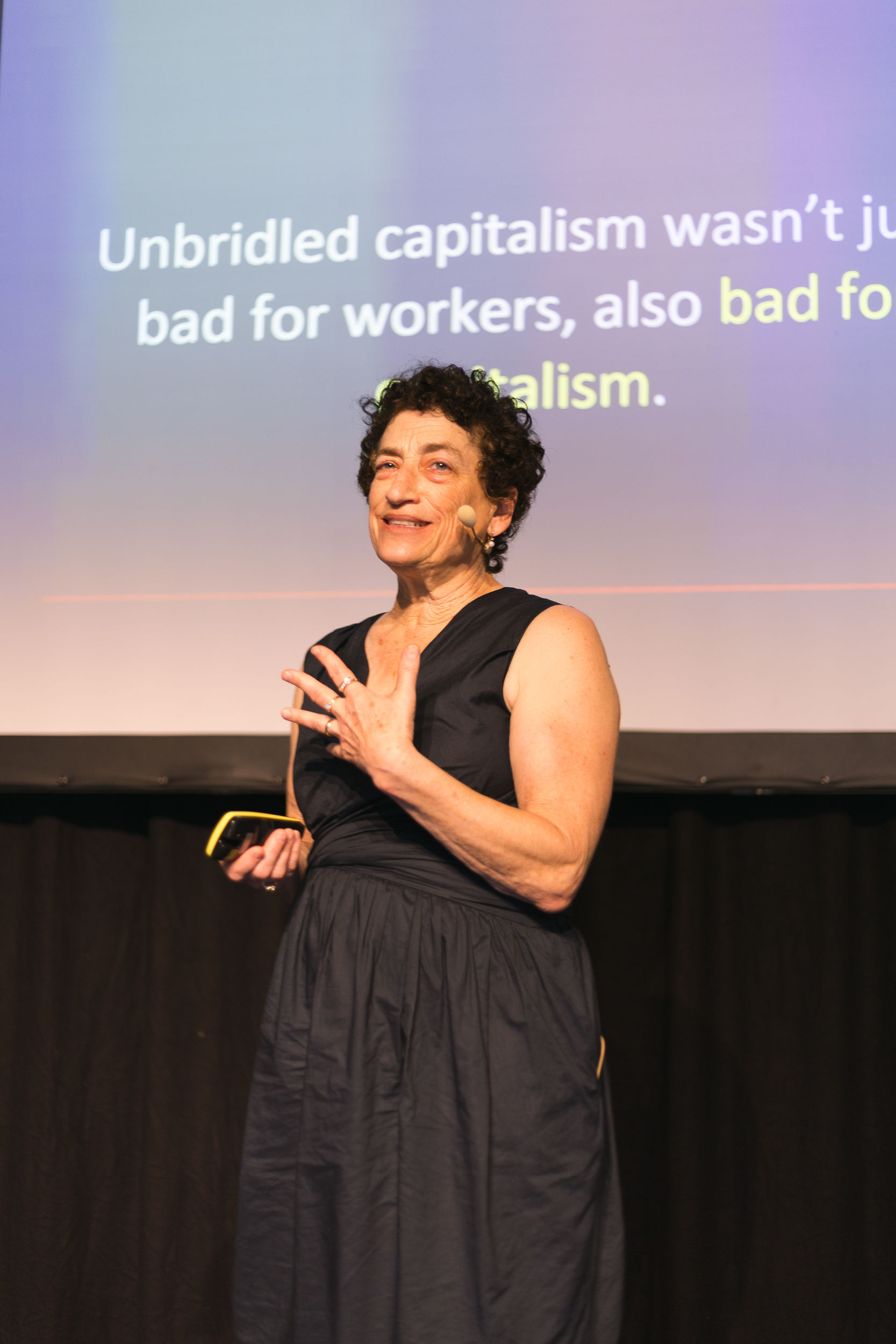
Naomi took us back in time to the ideas that have shaped how businesses, governments and societies think about markets, freedom and regulation.
The High Cost of the “Free” Market
Markets can create prosperity, opportunity and innovation. They can also create considerable hidden costs that do not appear in the price of a product or on a company’s balance sheet.
Naomi illustrated this through the history of working conditions. In 1911, 146 workers were killed in the Triangle Shirtwaist Factory fire in New York. Many were young women and teenage girls working in a factory. The tragedy drew attention to the dangerous conditions in which many factory workers were employed and became an important turning point in the push for stronger workplace protections.
But the Triangle fire was far from an isolated case. Naomi described what was known at the time as an “accident crises”; in 1900, one in every one thousand workers was killed on the job each year. In anthracite mining, the figure was even more striking, with 6% of workers killed each year. Workplace injury was widespread, alongside dangerous working conditions and child labor.
When workers were killed or injured, they or their families received no compensation. As Naomi explained, US Courts largely treated employment as a matter of contract: workers were considered to have “freely” entered into these agreements and in doing so, accepted the risks involved.
Naomi drew the thread through later examples including tobacco, pesticides, acid rain, ozone depletion and climate change. Although these are very different issues, they have something important in common: economic activity can create external costs—costs imposed on people, public institutions and the environment rather than fully borne by those generating them.
The fact that markets do not account for these consequences and their costs does not make them disappear. They simply appear elsewhere—in healthcare systems, polluted air and water, damaged ecosystems and risks passed on to future generations.
This was at the heart of her argument. A market can be productive and efficient while still producing outcomes that are harmful to society.
Freedom, Regulation and Collective Action
From Adam Smith’s The Wealth of Nations in 1776 to Ronald Reagan’s Hillsdale College Speech in 1977, Naomi traced how ideas about markets and regulation evolved over two centuries. Regulation gradually came to be portrayed not only as burdensome, but as a threat to freedom itself.
The idea gained strength through economists and political figures who presented profit, property rights and freedom as inseparable. Over time, arguments about individual rules became arguments about individual freedom: any intervention in the market could be framed as an attack on free enterprise.
Yet Naomi reminded us that even Adam Smith, often described as the father of modern economics, had a more nuanced understanding than is often suggested nowadays. In his writings, he recognised a role for banking regulation, public infrastructure, minimum wages and the protection of society when the actions of a few placed the wider public at risk. Overtime, however, these ideas were challenged through disinformation and partial reformulation.
One statement from the evening captured the limits of relying on markets alone:
“The free market didn’t end slavery. People, acting through their governments, did.”
Many of the protections we now take for granted were achieved through collective action and government intervention, often in the face of strong resistance. For Naomi, this is precisely why regulation matters and why, in some cases, it needs to be strict.
This historical perspective is not just about the past. The same tensions between evidence, economic interests and regulation continue to shape how we respond to today’s environmental challenges.
She closed with a simple but striking comparison:
“No one loves stop signs or speed limits. But without them, cars crash. In the same way, if we don’t get climate change right, things are going to crash”
The Role of Business
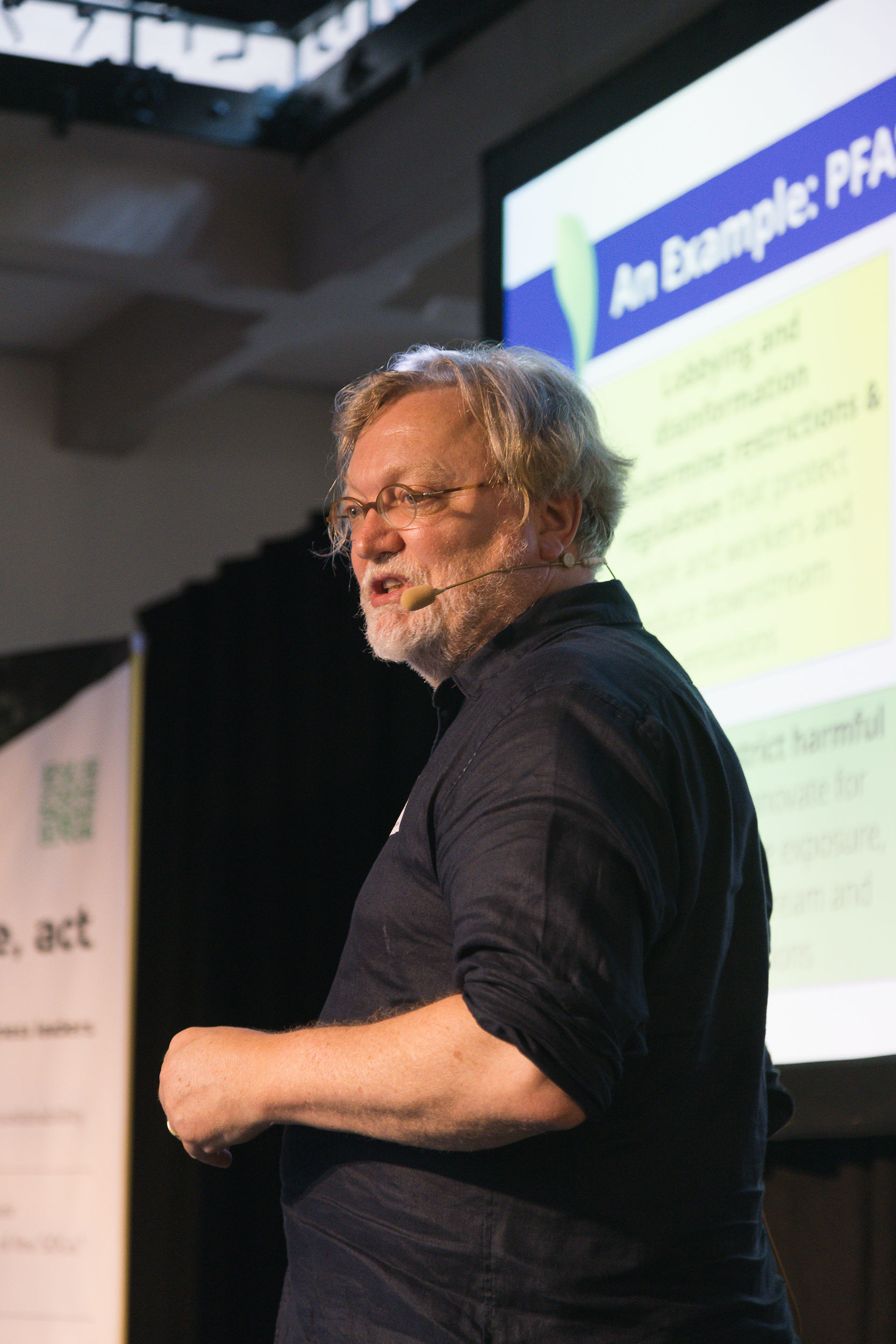
Patrick ten Brink, Secretary General of the European Environmental Bureau, brought Naomi’s historical perspective into today’s European context.
Using PFAS, often referred to as “forever chemicals”, as an example, he showed how lobbying and disinformation can delay action even when concerns about harm have existed for years. Meanwhile, the consequences are carried more widely through health risks, water-treatment costs and environmental contamination.
Patrick also highlighted another side of the story: a growing number of businesses are already investing in safer alternatives and supporting the move away from harmful substances.
This raised an important question for responsible companies: what role can businesses play in challenging disinformation, supporting effective regulation and showing their commitment through concrete investment?
Clear and consistent rules can also help businesses that are trying to move ahead. Without common standards, companies investing in safer products or more sustainable practices may find themselves competing with others that continue to operate to lower standards.
The evening did not offer a simple answer to what leadership should look like in turbulent times. Instead, it left business leaders with a question that may be more useful.
What role can your business play in shaping the rules that allow responsible solutions to succeed?
Explore Further with pre-reads shared ahead of the session
- For a quick read:
- Article : « We are witnessing a globalization of the manufacturing of doubt » Naomi Oreskes’ interview in L’Echo(2026)
- Article : The True Cost of the « Free » Market – TIME(2023) (5-7 min read)
- Article : Science Isn’t Always Perfect – But We Should Still Trust It – TIME(2019) (5-7 min read)
- For a deeper dive:
- Video : Why Trust Science?, 2019, 90 min talk
- Podcast : A Century of Disinformation: Naomi Oreskes and the Merchants of Doubt, Safeguarding Good Science, 41 min
- Podcast : S4Ep7 – Naomi Oreskes on ‘Writing on Ignorance’, The HPS Podcast: Conversations from History, Philosophy and Social Studies of Science, 34 min

